

Your dog is older than you think. Scientists at UC San Diego found that a 1-year-old puppy is actually closer to 30 in human years, not seven years, and a 5-year-old dog is roughly 60.
How to Calculate Dog Years to Human Years
(by the American Kennel Club)
Since the 1950s, the popular calculation of how old a dog was “in human years” has been that one dog year is the equivalent of seven human years. Even though this formula has been around for a surprisingly long time, the reality is not so cut-and-dried. That doesn’t stop people from defaulting to this traditional calculation. “You can’t really kill the seven-year rule,” says Kelly M. Cassidy, a curator of the Charles R. Connor Museum at Washington State University, who compiles studies about longevity in dogs.
One explanation for how this formula got started is that the 7:1 ratio seems to have been based on the statistic that people lived to about 70, and dogs to about 10.
“My guess is it was a marketing ploy,” says William Fortney, a veterinarian at Kansas State University. He tells the Wall Street Journal that it was “a way to educate the public on how fast a dog ages compared to a human, predominantly from a health standpoint. It was a way to encourage owners to bring in their pets at least once a year.”
How to Calculate Dog Years to Human Years?
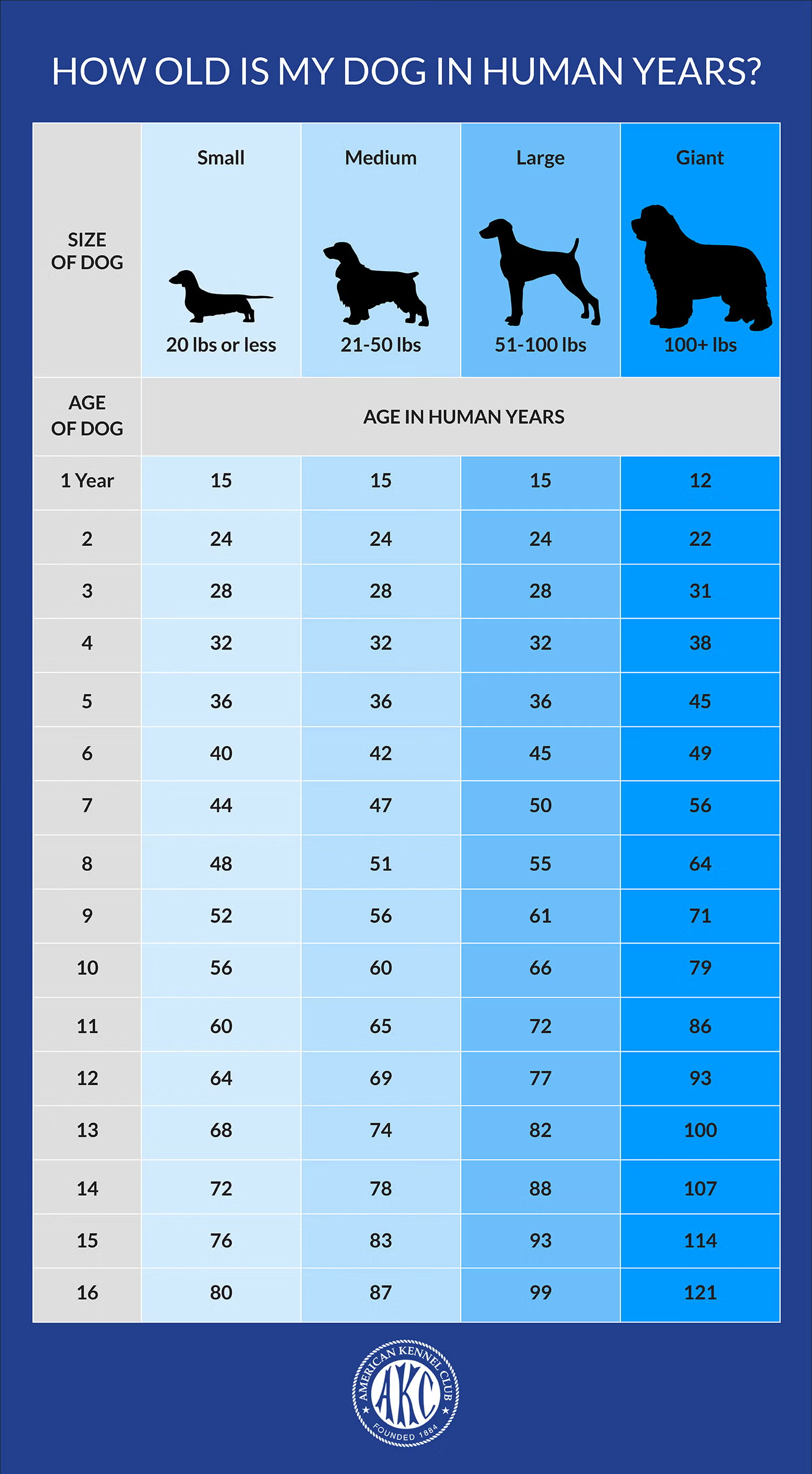
As a general guideline, the American Veterinary Medical Association breaks the calculations down like this:
- 15 human years equals the first year of a medium-sized dog’s life.
- Year two for a dog equals about nine years for a human.
- And after that, each human year would be approximately five years for a dog.
How Do Researchers Come Up With Those Numbers?
There are many several factors to consider, so it’s not possible to pin it down precisely, but the AVMA says: “Cats and small dogs are generally considered ‘senior’ at seven years old, but we all know they’ve got plenty of life left in them at that age. Larger-breed dogs tend to have shorter lifespans compared to smaller breeds and are often considered senior when they are 5 to 6 years of age. The ‘senior’ classification is based on the fact that pets age faster than people, and veterinarians start seeing more age-related problems in these pets. Contrary to popular belief, dogs do not age at a rate of 7 human years for each year in dog years.”
An example would be the Great Dane. The average life expectancy, according to the Great Dane Club of America, is about 7–10 years. Therefore, a 4-year-old Great Dane would already be 35 in human years. Again, keep in mind that these are rough estimates.
The National Center for Health Statistics doesn’t keep records for dogs. Instead, there are three main sources for data on their longevity: pet-insurance companies, breed-club surveys, and veterinary hospitals.
Why Do Smaller Dogs Live Longer than Larger Dogs?
This phenomenon has baffled scientists for years, and research has yet to explain the relationship between body mass and a dog’s lifespan.
Generally speaking, large mammals, like elephants and whales, tend to live longer than small ones, like mice. So why do small dogs have a longer average life span than large breeds?
Large dogs age at an accelerated pace, and “their lives seem to unwind in fast motion,” according to researcher Cornelia Kraus, an evolutionary biologist at the University of Göttingen in Germany, speaking to Inside Science. Scientists concluded that every 4.4 pounds of body mass reduced a dog’s life expectancy by about a month. The reason why is still unknown, though Kraus puts forward several possibilities, including that larger dogs may succumb to age-related illnesses sooner and that the accelerated growth of large dogs may lead to a higher likelihood of abnormal cell growth and death from cancer. Scientists plan future studies to better explain the link between growth and mortality.
Canine gerontology is a burgeoning field of science, as dog lovers are looking to not only extend the time they have with their pets, but to improve the quality of that time. The Dog Aging Project is studying the aging process in dogs, using geroscience research to “delay aging and promote healthy longevity.”
Whether measured in human years or dog years, as our dogs mature and age there is beauty and charm at every step along the way. With their gray muzzles and wise expressions, senior dogs are especially lovable and poignant.